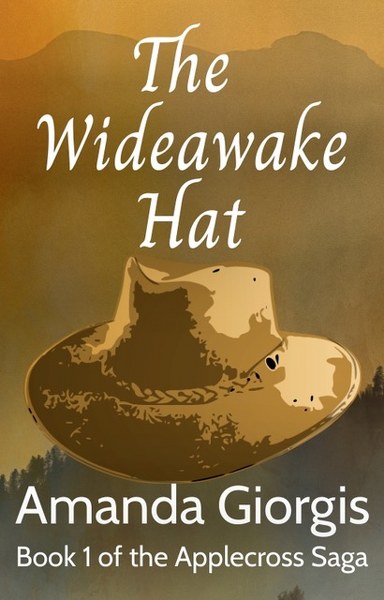
The
Wideawake Hat
The
Applecross Saga Book 1
by
Amanda Giorgis
Genre:
Historical New Zealand Fiction

From
the Scottish Highlands to the South Island of New Zealand, life was
harsh for the early pioneers who ventured into a new land far across
the seas where opportunity beckoned for those who could endure the
hardships.
On
Boxing Day, 1848 Sophia steps ashore with her new husband, George,
and begins her perilous journey inland to seek a place to call home.
Her hope for the child she carries to be born in a house that they
build together does indeed come true. And Sophia and George are
joined by other young folk who form a small but growing community of
fellow pioneers banding together to forge a life in this land of
promise. However, not all pioneers are honest and true, as Sophia
discovers to her cost. When tragedy strikes, an enigmatic Scottish
shepherd steps in to help our family and Sophia’s life takes an
unexpected turn.
James
Mackenzie is not a character of fiction. There is no doubt he
existed. In fact, the high plateau where Sophia settled now bears his
name. But the tales that surround his conviction and imprisonment for
sheep rustling are shrouded in mystery. No-one knows what became of
him for sure, though stories abound. Along with his clever and
faithful collie dog Friday, his exploits have become legends. Perhaps
there is more to tell of James Mackenzie and his influence on the
remotely beautiful high country, surrounded by snow-capped mountains…
**Get
it FREE!!**
Amazon
* Apple
* B&N
* Google
* Kobo
* Smashwords
* Books2Read
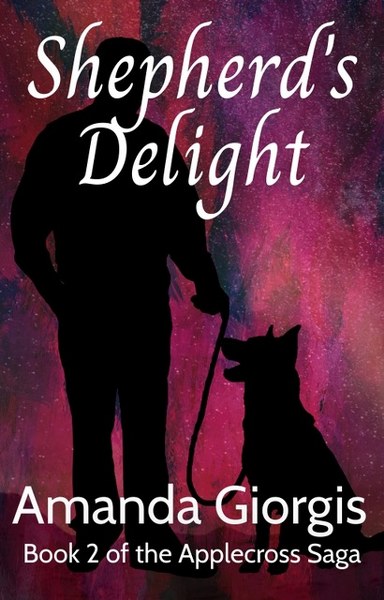
Shepherd's
Delight
The
Applecross Saga Book 2
Following
on from the success of The Wideawake Hat, Shepherd’s Delight is the
second book in the spellbinding Applecross Saga by Amanda Giorgis.
A
fictional tale, set against the stunning scenery of New Zealand’s
Mackenzie Basin, using true historical events surrounding the
European settlers in South Canterbury in the late 1800s.
Someone
is looking for James Mackenzie. Our hero is beset by dark thoughts.
Worried that his past deception may catch up with him, and depressed
by the death of his first true son. But, through thick and thin, his
wife Sophia sees the good in everything and everyone, and together
they are making a success of their lives at Applecross
station.
Visitors
come and go, some becoming welcome additions to their circle of
friends, and some who give more pleasure when they leave. But, the
final and unexpected guest, someone who has been searching for James
Mackenzie for a very long time, will be the one who changes things
forever.
**Only
.99 cents!!**
Amazon
* Apple
* B&N
* Google
* Kobo
* Smashwords
* Books2Read

Guy
Pender
The
Applecross Saga Book 3
Eligible,
handsome, witty and charming, Guy Pender is looking for a purpose in
life, maybe even a wife to join him in his desire to return to New
Zealand, where he hopes to be reunited with his friends at Applecross
Station. His experience of romantic love, so far, has been one of
misunderstood passion from an unexpected quarter.
It
is 1867, and he finds himself biding his time in Switzerland, taking
portrait photographs of the wealthy folk of Zurich, whilst sorting
out his much loved aunt’s estate, to which he is the sole heir. He
is lonely and homesick for his friends on the other side of the
world. Suddenly, a strikingly beautiful woman, Amelie Von Truber,
comes into his studio and from that moment on nothing is the same.
Their future together seems impossible as Amelie is betrothed to the
black-hearted Tobias Linburg, heir to a powerful business
empire.
Life
could not be more complicated, Amelie and Guy’s future together
looks impossible, but apart, their prospects look grim. Join us in
this sweeping tale to see if they can find a way through the web of
intrigue, dishonesty and revenge to build a future together in a
foreign land.
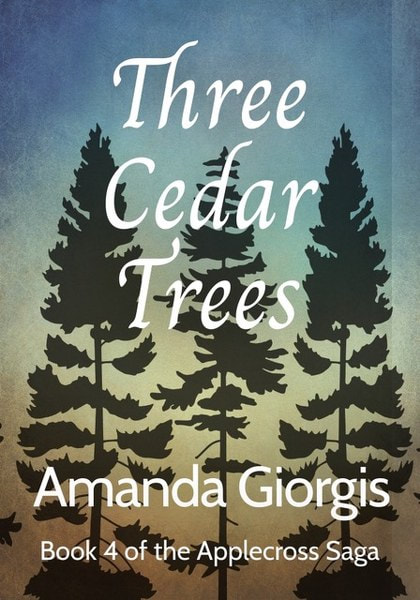
Three
Cedar Trees
The
Applecross Saga Book 4
What
happens to the trees happens to the boys...
.
Three
cedar trees grow beside the Applecross homestead in New Zealand’s
South Island. Precious trees, carried from Scotland across the world
as seedlings. A poignant reminder of home. As they mature, so too do
Freddie, the eldest son of Sophia Mackenzie, and Ben and Ed, twin
sons of Nancy Lawton.
To
Atewhai, the wise old Maori woman, the growth of the saplings into
mature trees is matched by the passage of the boys into manhood. Will
Sophia and Nancy allow their sons to strike out into the world, or
will they hold them back with their roots set firmly in the farm
soil?
And,
when one of the precious cedar trees is damaged in a storm, does it
foretell of tragedy involving one of the boys? Atewhai certainly
thinks so……
Join
us as our settlers embrace the late 1860s, a period of rapid change
in New Zealand. Railways, improved roads and better communications
are beginning to open up this remote and spectacular corner of the
world to visitors. Some fall in love and find it hard to leave the
basin, while others are torn between love and a desire to be involved
in this exciting period of progress.
Who will stay, and who will
leave for ever?
Three
Cedar Trees is the 4th book in The Applecross Saga.


Amanda
Giorgis is the creator of the fictional Applecross sheep station in
New Zealand's beautiful Mackenzie Basin. Here you will meet Sophia,
who settled in New Zealand with her husband, George in the early
1850s. After George's tragic death, Sophia marries James Mackenzie
and the couple build their home together in the Basin. James is not a
character of fiction, though the stories that are woven around
Applecross are not necessarily how things turned out in real life for
the man who was convicted of sheep rustling and later pardoned for
his crimes. The truth is, nobody knows what really became of
him.
Amanda
likes to weave well-researched, true historical facts into her
stories while building credible and likeable characters amongst the
ordinary folk of rural New Zealand in the late 1800s. She would love
you to join her in their adventures, triumphs and tragedies.
Oh,
and did we mention dogs? The collies who worked so hard on high
country farms feature in our stories too. Meet Friday, James'
favourite collie and all her descendants. They deserve their fame
too!
Amanda
was born in Somerset, England. She emigrated to New Zealand in 2008
and now writes while looking out onto the flat plains with
snow-capped mountains beyond. It is a place where it is easy to find
inspiration for stories of early pioneers, who made this unique place
their home.
She
shares her home with her husband, Terry and three rescued huntaway
dogs, Nemo, Jess and Ted, some chickens, who are more ornamental than
productive, ten acres of wild garden and the dark skies of the
Southern Hemisphere.
When
not writing, Amanda rings church bells and enjoys photography,
gardening and finding out about her family history. On lazy days,
when not reading a book, she gets the knitting needles out.

$15 Amazon